



The Perception of the Will
I’ve always been irritated by the will.
It’s something of an aporia. A vessel into which language flows, and cannot find a way out. Whenever reason comes up against a contradiction it can’t resolve, it resorts to the will. “I want.” How are you supposed to argue against that? Tell someone what they actually want, rather than what they profess to want? Good luck with that.
And the will is deployed in all kinds of situations. In politics, when the unrestrained will is considered both the pinnacle of freedom and the foundation of the state of anarchy and chaos; in the turmoil of aesthetics, when it surfaces as the single ship still floating after a storm of maxims and axions; or in sexual theory, when it is the subtle mask we don over emotion and desire. The will may be a thin veneer, nothing more than a veil over other systems with more obscure functions, but it still returns time and again as the public face of anything in any way human, the figure head of humanity, the obnoxious hero who cannot be defeated, and who has no weakness.
The will also encroaches into science. Science is largely still anthropomorphic, and with the attribution of human qualities to the functions of nature the will must naturally follow. Time and again everything from molecules to mountains “want to” accomplish all kinds of goals, in a teleological expression of nature’s “will” The will is the default causal force, the shadow of a prime mover without which we cannot seem to comprehend any motion. If inertia is a natural state, then to overcome inertia naturally requires someone unnatural to push us away from such entropy, so we might “seek” to return. If nature is the fundamental gravity holding us to the world, then the will is what also to walk over its surface, and what pulls us up by our boot straps.
This is not to say that the will is a fantasy, and that we live in a deterministic world of trains upon rails, that have no destination but destiny itself. Fate is the other hand to the will, its corollary and partner. The vicissitudes of desire find their universal expression in the unity of the will, and their foil in fate, but their mutual plane of existence is time–the axis by which we notice any motion. Whether we give preference to fate or to will, it is always one moving in comparison to the other across the surface of time. To “want” is to envision the future, in a dimension that is not the now when the want is not fulfilled. Fate is just another dimension envisioned, when the want is either fulfilled, or is not. Whether you get to the desired future by will or by fate, it is still the same journey. The rails remain, the only thing changing is the engine.
So what is really going on here? If we damn the will and fate as perceptual reminder points of our sense of space over time, then what are we left with?
Patterns.
Change is perception of a difference in patterns. A shift in the rhythm. We could assume that a change denotes some sort of causality. Something must be responsible for a change, willful or not. The inertia of repetition does not shift without something pushing it.
Or does it? What if change itself was the cause of change? What if iteration was not a state of rest, but a state of generative cycling, from which the perceived stasis of repetition was only a brief plateau in a more complex, evolving process? The flat plane of repetition, is not a solid, but a stutter, a flat spot in the acceleration. We began to see repetition not as a flat plane, but only the static perception of a dynamic process. What if time was not the consistent x-axis upon which we ground motion, but the natural, perceptual extension of the act of viewing motion? Time is the definition of consistency, as we perceive it.

Adrian Bejan, the founder of Constructal Law, gives us the plane to stand on to view nature as less a monolithic entity requiring will to animate it, but a roiling surface of dynamism, where the clockwork spins away in constant motion, creating the perception of stillness when homogenized into twenty-four frames per second.
“Constructal theory is the view that (i) the generation of images of design (pattern, rhythm) in nature is a phenomenon of physics and (ii) this phenomenon is covered by a principle (the constructal law): ‘for a finite-size flow system to persist in time (to live) it must evolve such that it provides greater and greater access to the currents that flow through it’. This law is about the necessity of design to occur, and about the time direction of the phenomenon: the tape of the design evolution ‘movie’ runs such that existing configurations are replaced by globally easier flowing configurations. The constructal law has two useful sides: the prediction of natural phenomena and the strategic engineering of novel architectures, based on the constructal law, i.e. not by mimicking nature. We show that the emergence of scaling laws in inanimate (geophysical) flow systems is the same phenomenon as the emergence of allometric laws in animate (biological) flow systems. Examples are lung design, animal locomotion, vegetation, river basins, turbulent flow structure, self-lubrication and natural multi-scale porous media.”
from the Abstract of “The Constructal Law of Design and Evolution in Nature”, by Adrian Bejan and Sylvie Lorente, Phil. Trans. R. Soc. B (2010) 365, 1335–1347
For identifiable patterns to have any duration over time–i.e. to have any perceptual ‘stasis’ as we see them–they must be constantly evolving. For two systems to “look like they’re doing the same thing”, they are not “wanting to evolve” any more than they are “wanting to maintain themselves”. They are simply following the same law of perceptual persistence by replacing themselves as best fits their situation, in the perceptual plane of evolutionary stability.

Now, I’m not a physicist, just a humble semiotician, with an eye and interest for new symbols and alternate meanings. When someone like me strays into the territory of science, it is often to steal metaphors, and then run quickly back to the safer domain of philosophical meaning, where everything is loose and free, and we can toss around our terms and examples like playing cards. The great thing about the Constructal Law is that it is not metaphor, but a conclusion of thermodynamic principles. By abandoning the metaphor of will and fate, we on the semiotics side of the fence are able to actually get at the meat of the physics, and appreciate the patterns of the natural world exactly as patterns.
In his latest paper, Adrian Bejan takes on one of the classic metaphors of human technology: the wheel. I’d always assumed that a wheel, and by this I mean a free-spinning, load-bearing surface placed on an axle, did not exist in nature. But what does exist is its pattern.
“An alternative way to predict the wheel is to view the animal as a rolling body.” As the weight falls forward, an animal must bring up a leg to support the weight, just as a wheel brings up a spoke. As leg replaces leg, like spoke replaces spoke, the animals momentum is rolled forward. Wheels evolve to do this task better. As “the highest allowable stresses are distributed more uniformly, the flow of stresses encounters fewer strangulations, and the wheel becomes lighter and less costly in terms of the useful energy destroyed in order to carry it.” The same thing happens with animal legs, evolving to maintain the flow of these stresses, and to carry the weight of the animal as it rolls forward more efficiently.
The pattern replicates itself, allowing the force that shapes it to flow more smoothly, if it is to continue to exist. As interesting as explaining the ubiquitous nature of the wheel and simultaneously, the ubiquitous nature of bipedal animals, is to notice the similarity of the pattern itself. We do not have to assume that an evolutionary animal “wants” to get up and walk on its hind legs or that humans “want” to put wheels on everything. It’s simply what happens, as part of a continuous pattern.
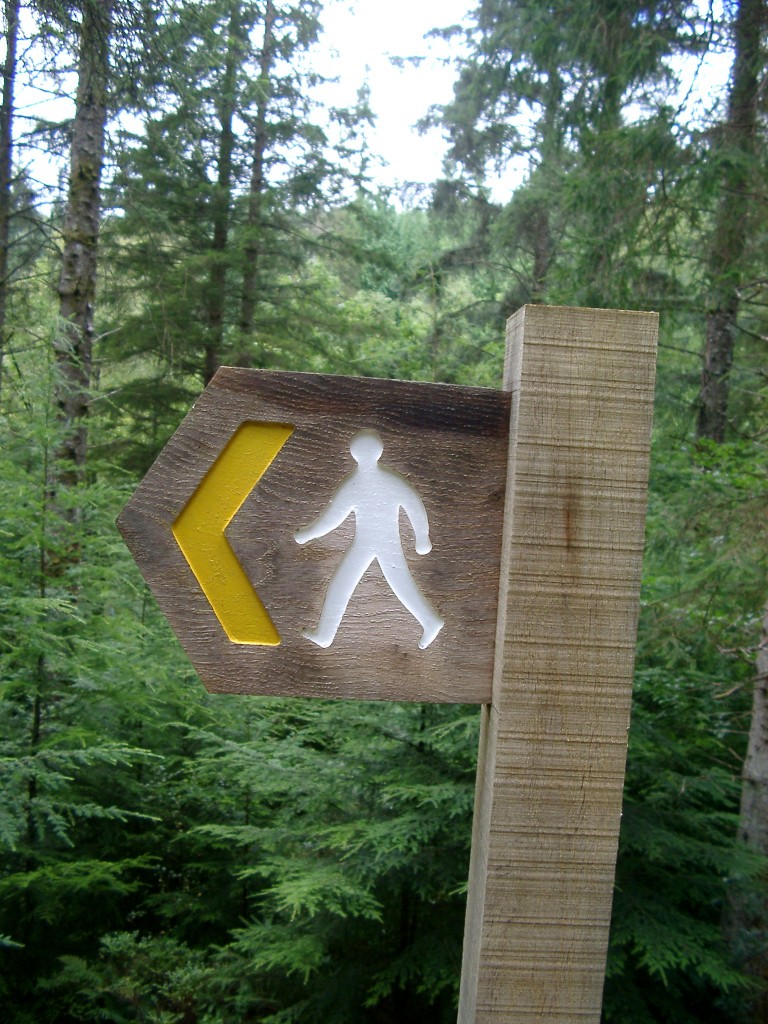
In addition to cleverly dispatching my nemesis, the will, back to the humanistic annals of ethical philosophy, this leads to a new line of thought about one of my other familiar patterns: the left and the right hand. Dualistic thinking, dialectics, and binary notation all have their root in the common semiotic distinction that left is not right. Two sets, of which there can be no union. What is the pattern link between the rotation of a wheel, and the bipedal pattern of left, right, left, right? What ghosts could be dispelled from the surface of this plane, and what mechanisms lie underneath? Could it be that the pattern of dialectics develops as the most efficient way for organizing different mental categories, which keeping the distinction between them, their categorically ideal momentum, in motion, just as the spokes of a wheel do? Perhaps the distinction of duality acts as the bipedal legs of our thought process, the only categorical system capable of transferring concepts back and forth, like pouring water between two pitchers. What would be the “physical” limitations of a binary concept’s ability to let thought flow through it? At what point would a dialectic snap, and require a third term to take the “weight”? Or is the stasis we perceive in our patterns of conscious thought the full progression of its evolution, up until the present time? Will there be further evolution of this bipedal thought, or has it achieved its maximum utility?
These are mere observations of pattern similarities. But what we learn from Constructal Law is that a pattern is not the last output of a causal system, but often it is representative to our perception of the mechanism of the pattern itself. To observe a pattern is to decode the method of the pattern’s creation. And once we have recourse to abandon the will as the kernel point for nature’s motions, as well as our own thought and symbols as part of nature, many potential patterns can be perceived.
“The Constructal Law of Design and Evolution in Nature”, by Adrian Bejan and Sylvie Lorente, The Philosophical Transactions of the Royal Society B (2010) 365, 1335–1347
“The constructal-law origin of the wheel, size, and skeleton in animal design,” by Adrian Bejan, American Journal of Physics, Vol. 78, No. 7, 1-8
[Links through Constructal.org]
Categories: Ballast
Tags: metaphysics, technology, theory
Comments: No Comments.